Introduction
Tensile structures are lightweight architectural systems where a high-strength fabric is stretched and supported using cables, masts or steel frames. These designs rely on tension to stay stable, allowing them to cover large outdoor areas with minimal material. They create modern, airy spaces while offering durable protection from sunlight, rain and weather conditions. Tensile structures are widely used in public spaces, transport hubs, sports facilities and commercial environments due to their flexibility, strength and visual appeal.
What Are Tensile Structures?
Tensile structures are fabric-based roofing systems that remain stable through continuous tension. The membrane is anchored and stretched across cables or steel elements so the entire surface stays firm, durable and weather-resistant. This tension-based form allows architects to create wide-span coverings without heavy beams or columns, making the structures efficient, elegant and quick to install. They are ideal for open spaces that require shade, ventilation and long-lasting protection.
How Tensile Structures Work
Tensile structures operate through pre-tensioning—the fabric is tightened between supports so it maintains shape and resists loads. The tension is distributed across the fabric surface and transferred into cables, masts or frames, creating a strong yet lightweight roofing solution. This structural behavior reduces material weight, increases flexibility and enhances durability. When installed correctly, tensile membranes withstand wind, heat, rain and continuous outdoor exposure while maintaining structural integrity.
Types of Tensile Structures
Tensile structures are used across multiple environments where large covered areas, weather protection and aesthetic flexibility are required. Based on the applications shown, here are the main types and how they are used.
1. Airports & Metro Stations
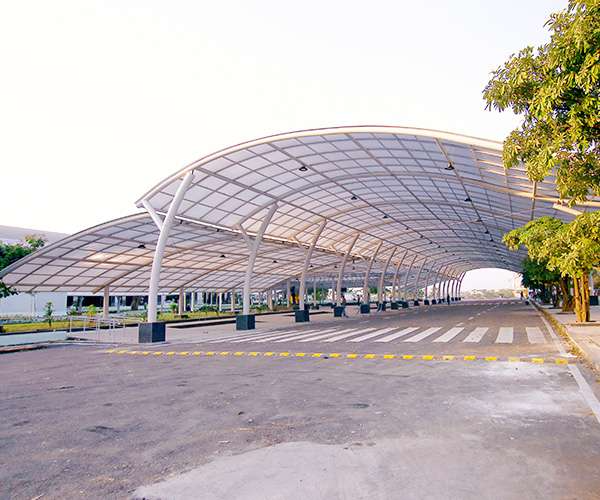
These tensile roofing systems provide wide-span coverage at transport hubs. The tensioned membrane is supported by steel arches or masts, creating a strong yet lightweight canopy that protects passengers from sun and rain while maintaining airflow.
Benefits
Ideal for large passenger circulation areas
Reduces heat exposure and glare
Enhances architectural appeal with open, airy forms
Allows natural daylight while providing shade
2. Stadiums & Sports Centers
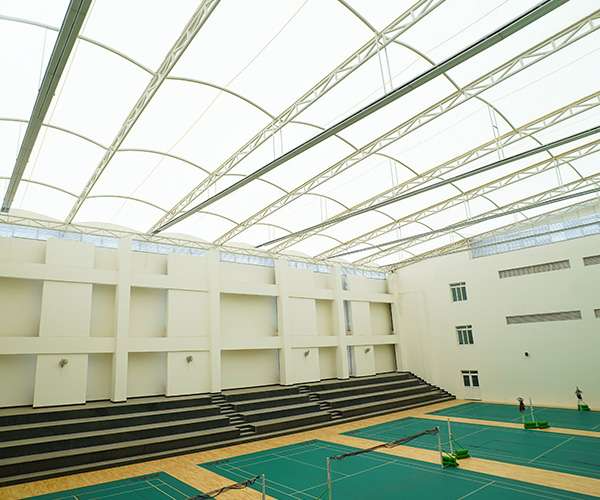
Tensile roofs are commonly used in athletic complexes to shade seating areas, pools, and spectator zones. Their flexible forms adapt well to curved stands and large-span areas without heavy structural elements.
Benefits
Wide-span coverage without obstructing views
UV and weather protection for players and spectators
Cost-effective compared to traditional roofing
Modern, dynamic aesthetic suitable for sports environments
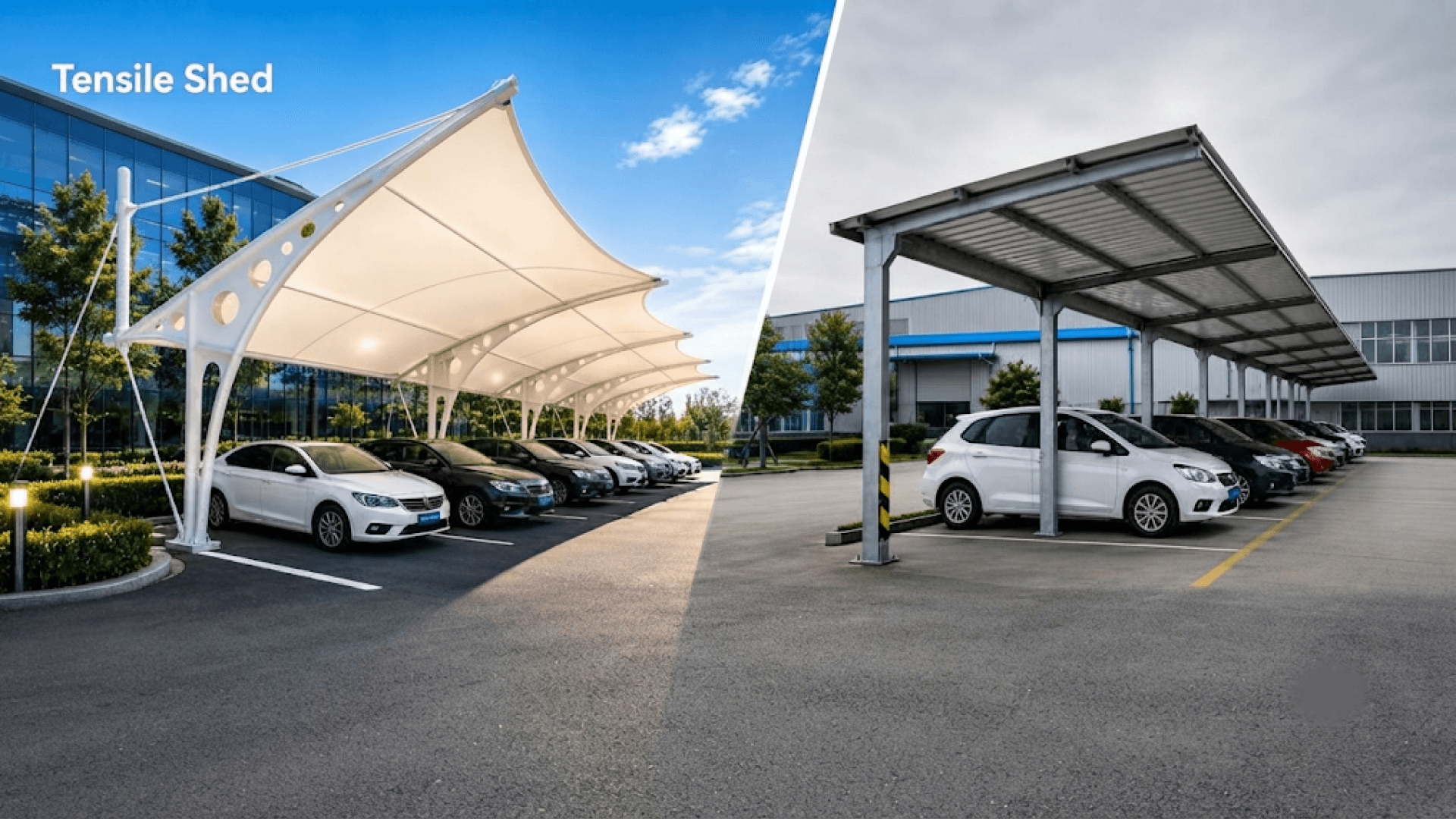
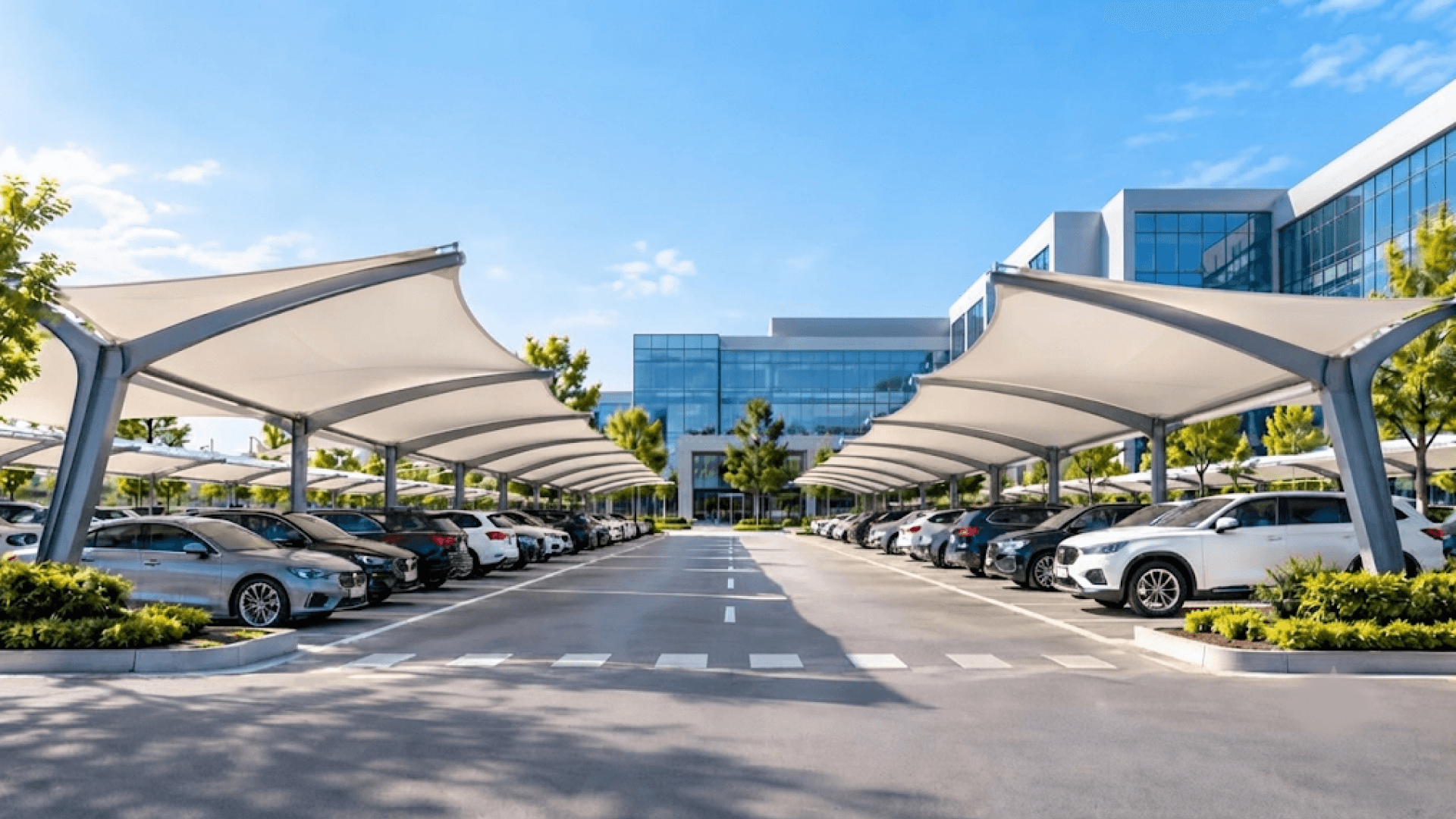
3. Vehicle Parking Tensile Structures
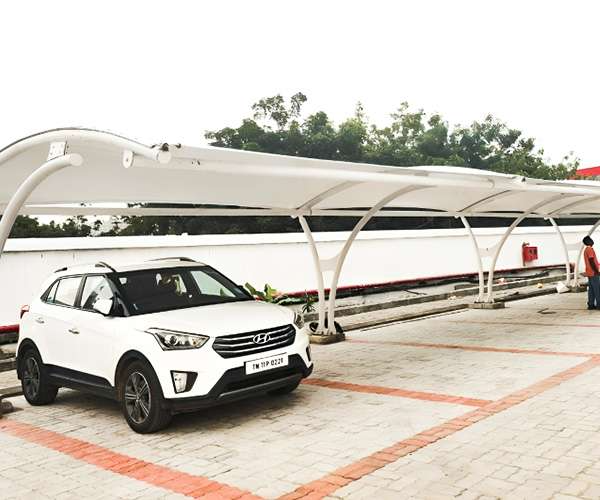
These fabric-covered car parking shelters offer all-weather protection for vehicles in residential, commercial, and institutional spaces. The structure uses tensioned fabric to create durable shade zones that withstand outdoor conditions.
Benefits
Shields vehicles from heat, rain, dust and UV exposure
Improves parking aesthetics compared to metal sheds
Faster installation and flexible layout options
Low maintenance and long-lasting durability
4. Public Buildings & Temples
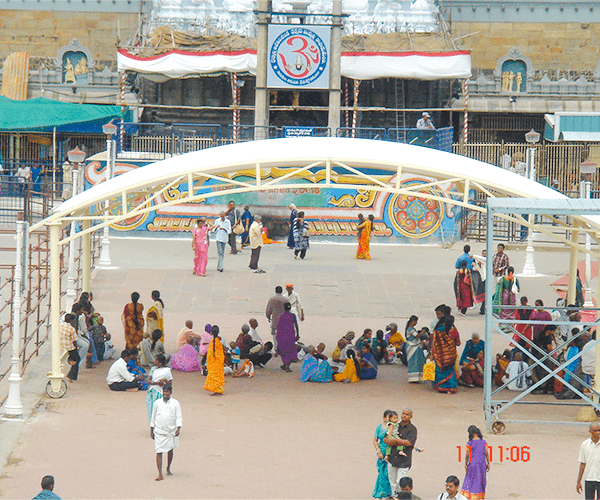
Tensile membranes are used to create shaded walkways, open gathering spaces, and cultural zones. Their airy design helps manage crowd flow while providing comfortable shelter in outdoor religious and heritage environments.
Benefits
Creates cool, shaded spaces for visitors
Allows natural airflow and ambient light
Lightweight and visually minimal, suited for cultural sites
Durable during peak gathering events
5. Convention Centers
Large event venues use tensile structures for entrances, drop-off points, and gathering areas. The wide-span design supports crowds while maintaining a clean architectural profile.
Benefits
Wide, column-free space ideal for large gatherings
Eye-catching entrance aesthetics
Lightweight structure reduces load on the main building
Effective protection from outdoor conditions
6. Tensile Canopies
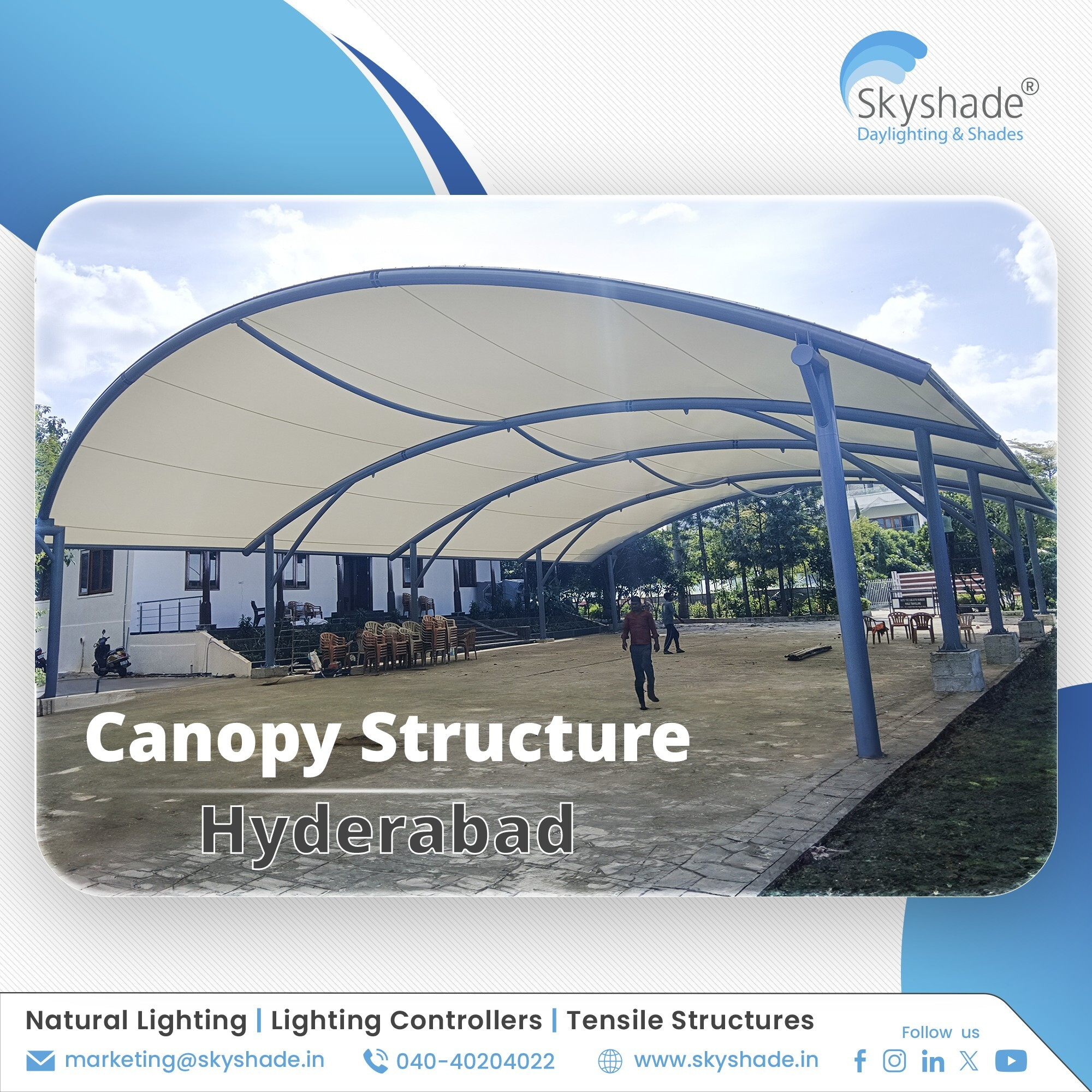
Tensile canopies provide versatile shade solutions for gardens, outdoor sitting areas, terraces, cafés, pathways, and open landscapes. Their flexible geometry supports both functional shading and modern visual appeal.
Benefits
Enhances outdoor comfort with breathable shade
Elegant free-form and curved designs
Easy to adapt to different locations and sizes
Suitable for residential and commercial outdoor spaces
7. Atriums
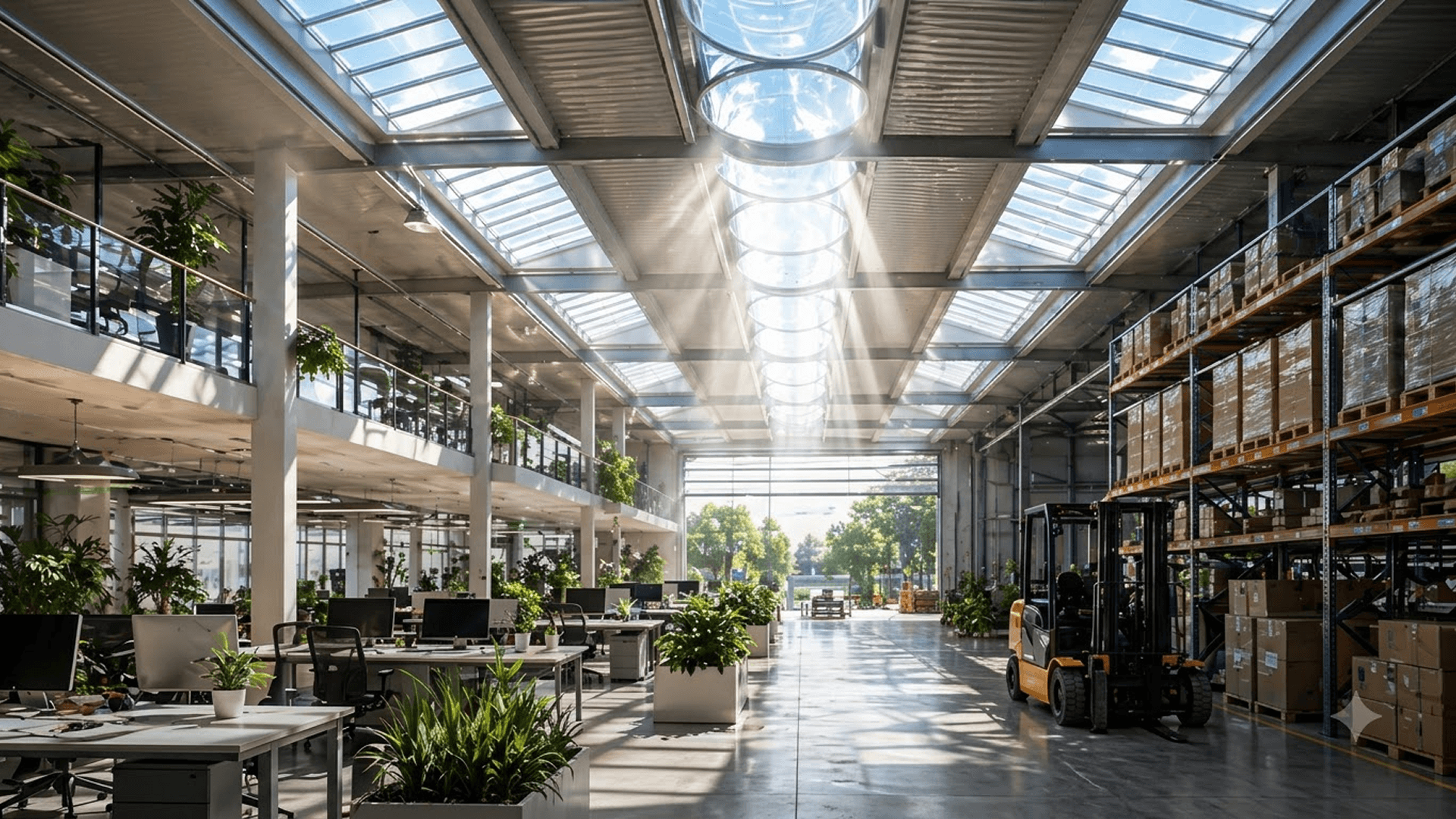
Atrium tensile covers create bright, open roof systems above courtyards, lobbies, and central building spaces. The tensioned membrane diffuses natural light while offering rain and heat protection.
Benefits
Brings soft natural light into interior zones
Provides ventilation-friendly coverage
Reduces heat and improves energy efficiency
Suitable for malls, hotels, institutions, and office complexes
Conclusion
Tensile structures combine innovative engineering with functional outdoor comfort. By using tensioned membranes supported by cables and steel elements, they create lightweight, wide-span roofing solutions ideal for modern architecture. Whether used for transport hubs, parking spaces, public buildings, sports centers or atriums, tensile structures offer durability, visual appeal and long-lasting protection in all weather conditions. They continue to grow as an efficient and elegant choice for contemporary outdoor design.