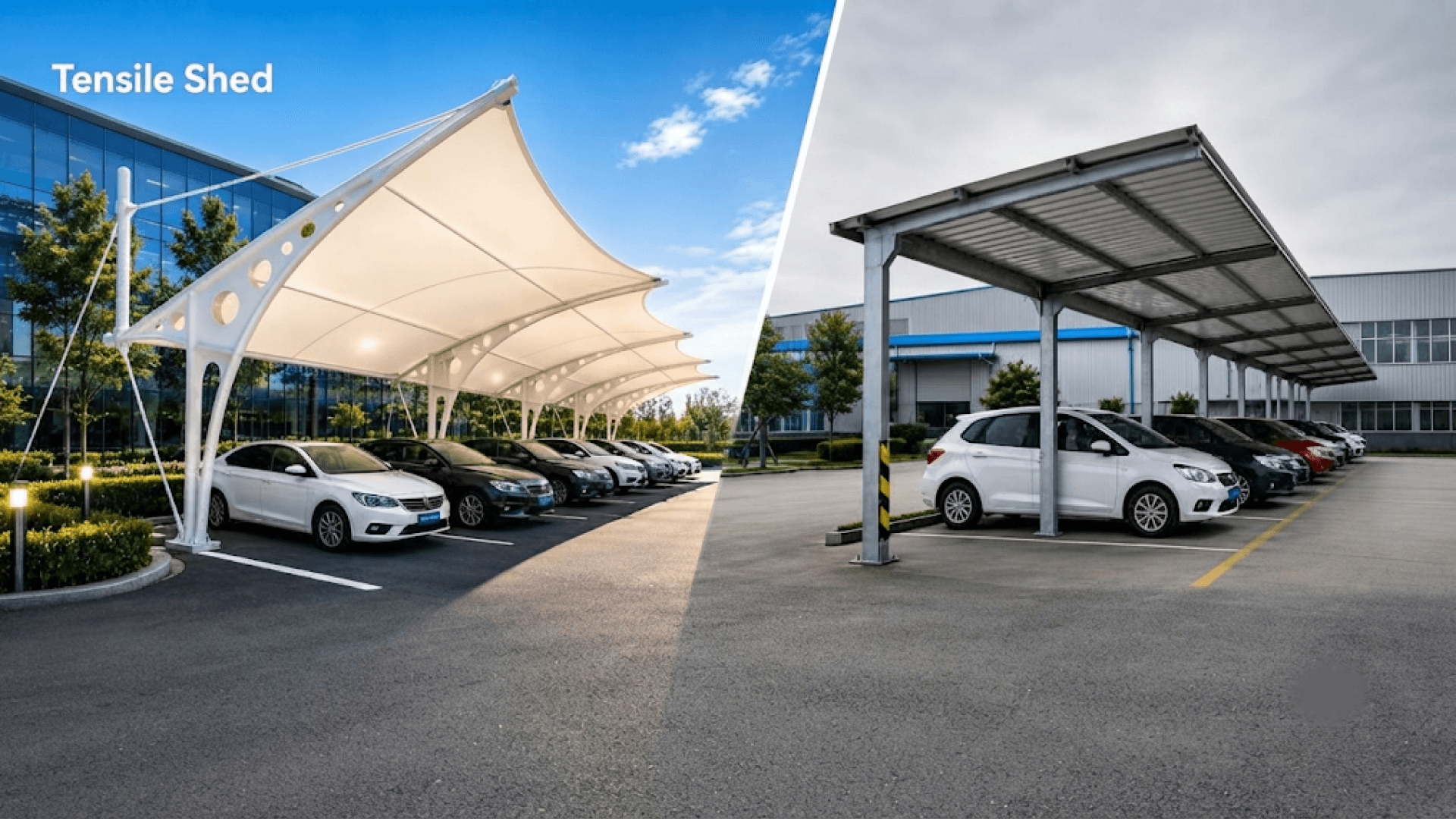
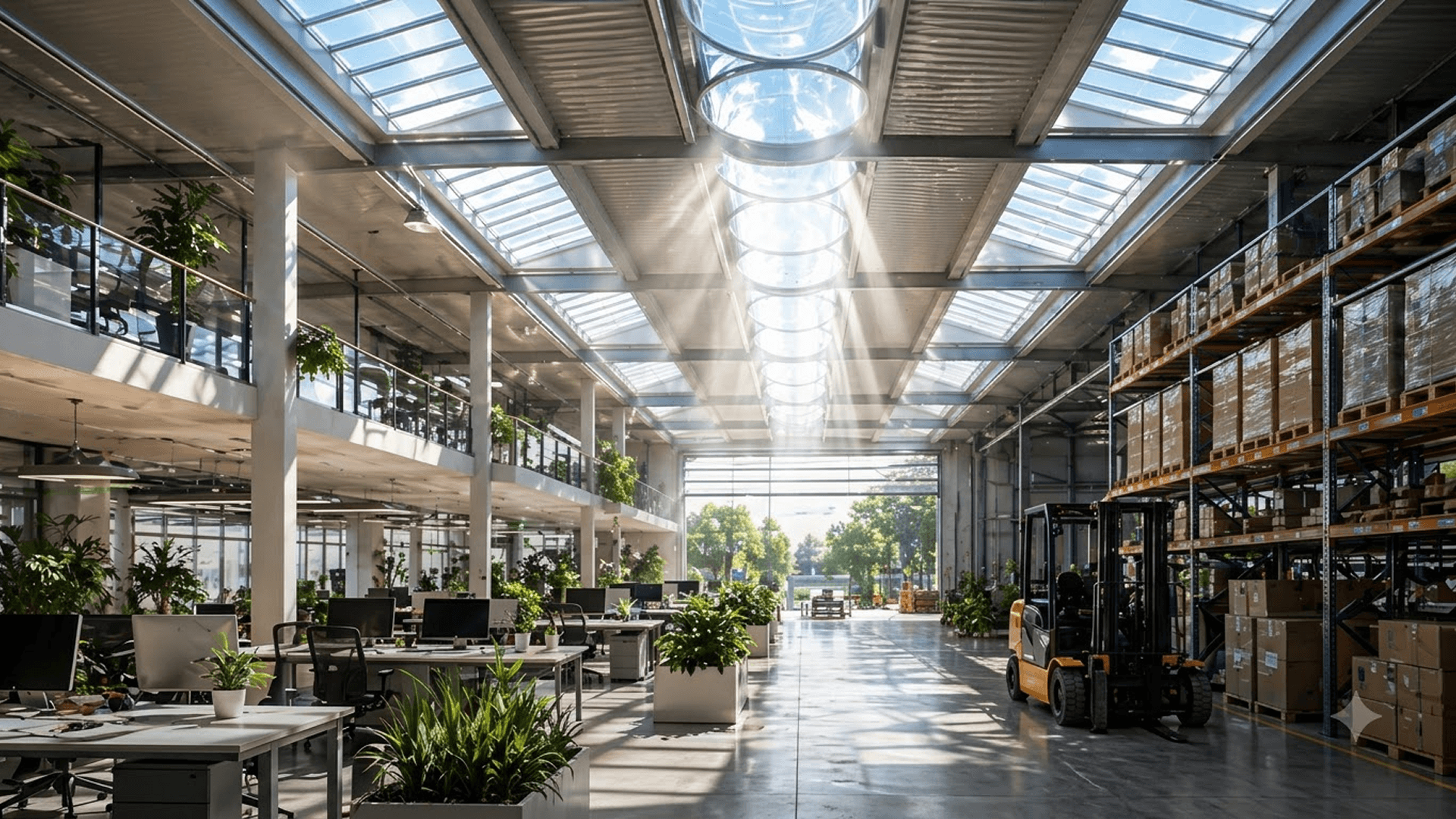
The three main tensile roofing materials are PVC-coated polyester, PTFE-coated fibreglass and ETFE film. PVC is commonly used for parking sheds, canopies and commercial shade structures. PTFE is suited to permanent large-span roofing, while ETFE is selected for transparent and light-filled architectural applications. The right material depends on climate, span, light transmission, durability and project use.
Tensile roofing structures are widely used in modern architecture because they combine functional coverage with lightweight and visually appealing designs. They can be seen across airports and metro stations, stadiums, commercial entrances, car-parking areas, atriums, convention centres and public buildings. However, the performance of a tensile structure depends greatly on the membrane material used. Strength, flexibility, light transmission, weather resistance, maintenance and expected lifespan can all vary between materials.
The most commonly used tensile roofing materials include PVC-coated polyester, PTFE-coated fibreglass and ETFE film. Each material serves different architectural and functional requirements.
What Is a Tensile Roofing Material?
A tensile roofing material is a flexible membrane that is stretched and tensioned over a supporting structure made from steel, cables, columns and specially designed connection systems.
Unlike conventional roofing materials, the membrane does not simply rest on the supporting frame. It is placed under calculated tension to create a stable roof form capable of resisting external forces such as wind and rain.
A properly designed tensile roofing system generally includes:
Fabric or membrane roofing material
Structural steel framework
Supporting cables
Tensioning systems
Anchoring components
Edge details and drainage arrangements
The roofing material must be selected together with the structural design. Choosing a membrane only by appearance may result in poor performance, difficult maintenance or a shorter service life.
1. PVC-Coated Polyester Fabric
PVC-coated polyester is one of the most commonly used materials for tensile fabric structures. It consists of a woven polyester base fabric coated with polyvinyl chloride. The polyester provides structural strength, while the PVC coating helps protect the fabric from environmental exposure.
PVC membrane can be manufactured in different colours and levels of translucency, making it suitable for a broad range of architectural applications. Its flexible nature also allows designers to create curved, conical, barrel-vaulted and customised roof forms.
Main benefits of PVC-coated polyester
Flexible and suitable for customised shapes
Available in multiple colours
Can provide partial natural-light transmission
Suitable for small and large roofing applications
Relatively lightweight
Can be fabricated into large membrane panels
Offers protection from sunlight and weather
Easier to install than many conventional roofing systems
Common applications
PVC-coated polyester is commonly used for:
Car-parking tensile structures
Entrance canopies
Walkway covers
School and college courtyards
Commercial outdoor areas
Public gathering spaces
Temple and community-hall roofing
Industrial shade structures
Restaurant and resort canopies
Skyshade uses high-performance PVC-coated polyester engineered to withstand UV exposure and other environmental factors in its tensile structure solutions.
2. PTFE-Coated Fibreglass Membrane
PTFE-coated fibreglass is a durable architectural membrane commonly selected for large or long-term tensile roofing projects. The material consists of woven fibreglass coated with polytetrafluoroethylene. It is known for its weather resistance, structural stability and ability to perform in demanding climatic conditions.
PTFE membranes are frequently used for projects where durability, large-span coverage and long-term architectural performance are major requirements. Specialist tensile-architecture sources identify PTFE-coated fibreglass as a highly durable and weather-resistant membrane suitable for long-term roof applications.
Main benefits of PTFE membrane
Strong and dimensionally stable
Suitable for large-span structures
Resistant to severe weather exposure
Provides diffused natural light
Requires comparatively limited routine maintenance
Suitable for permanent architectural projects
Maintains a clean and premium appearance
Common applications
PTFE tensile roofing is commonly considered for:
Airports
Stadiums
Sports centres
Large convention centres
Transport terminals
Public infrastructure
Exhibition spaces
Large commercial developments
The material is particularly relevant when a project requires long-term performance and coverage over a substantial area.
3. ETFE Film
ETFE is a transparent or translucent architectural film used for lightweight roofing, atriums and building-envelope systems.
Unlike PVC and PTFE membranes, which are woven fabrics with protective coatings, ETFE is a film. It can be installed as a single layer or configured in multi-layer cushion systems, depending on the project design.
ETFE is significantly lighter than glass and can offer high transparency, making it suitable for projects where natural light and visual openness are important.
Main benefits of ETFE
High natural-light transmission
Lightweight compared with glass
Suitable for transparent roofing
Creates bright and open interior spaces
Can be printed or treated to manage solar exposure
Suitable for complex architectural forms
Useful for roofs, atriums and façades
Common applications
ETFE is often used for:
Transparent atrium roofs
Airport terminals
Shopping malls
Botanical spaces
Sports facilities
Exhibition centres
Large public buildings
Architectural façades
ETFE is usually selected when transparency is more important than the traditional fabric appearance of PVC or PTFE.
PVC vs PTFE vs ETFE: Basic Comparison
Factor | PVC-Coated Polyester | PTFE-Coated Fibreglass | ETFE Film |
|---|---|---|---|
Material type | Coated woven fabric | Coated fibreglass membrane | Lightweight architectural film |
Appearance | Fabric-like and available in colours | Premium, usually light-coloured | Transparent or translucent |
Flexibility | High | Suitable for engineered permanent forms | High architectural flexibility |
Natural light | Partial, diffused light | Diffused natural light | High transparency |
Typical use | Canopies, parking and shade structures | Large permanent roofs | Atriums and transparent roofs |
Project scale | Small to large | Primarily medium to very large | Medium to very large |
Best suited for | Versatile everyday applications | Long-term infrastructure projects | Light-filled architectural spaces |
The final performance of each material can differ according to its grade, coating, thickness, manufacturer and structural design.
How to Choose the Right Tensile Roofing Material
There is no single tensile roofing material suitable for every building. The correct option should be selected after understanding the project conditions.
1. Building application
A car-parking shed does not have the same requirements as an airport roof. The intended use of the space should be evaluated before selecting the fabric.
2. Required lifespan
Permanent public infrastructure may require a different membrane specification from a small entrance canopy or temporary event structure.
3. Light-transmission requirement
Some spaces need shade with limited glare, while atriums and commercial interiors may require higher levels of natural light.
PVC and PTFE generally provide diffused light, while ETFE can offer greater transparency.
4. Local weather conditions
The design must account for:
Wind speed
Rainfall
Temperature variation
UV exposure
Drainage requirements
Site surroundings
The membrane, cables, steel frame and anchor points should be engineered as one complete system.
5. Roof shape and span
Conical roofs, hypar structures, barrel vaults, cantilever forms and large free-span roofs create different structural forces. The selected material must support the intended geometry and tensioning method.
6. Maintenance accessibility
Dust, pollution, nearby trees and industrial exposure can affect cleaning requirements. The structure should provide safe access for inspection and maintenance.
7. Fire and technical requirements
Commercial and public-building projects may have specific fire-performance and material-certification requirements. The selected membrane grade should comply with the applicable project specifications and local regulations.
Why Engineering Matters as Much as the Fabric
Good tensile roofing is not created by fabric alone. Even a high-quality membrane can underperform when the structural form, tension, drainage or anchoring is poorly designed.
Professional tensile structure development should include:
Site evaluation
Conceptual design
Structural analysis
Material selection
Wind-load assessment
Steel and cable engineering
Membrane pattern development
Fabrication
Installation and tensioning
Final inspection
Every tensile structure varies in size, shape, surroundings and functional purpose. Skyshade provides customised architectural design, manufacturing and installation services for residential, commercial, industrial and public-building applications.
Final Thoughts
PVC-coated polyester, PTFE-coated fibreglass and ETFE are all valuable tensile roofing materials, but they serve different requirements. PVC-coated polyester is a versatile choice for canopies, parking areas, walkways and general shade structures. PTFE is better suited to permanent, large-scale projects requiring long-term architectural performance. ETFE is ideal for applications where transparency, natural light and a lightweight alternative to glass are important. The best material should always be chosen according to the building application, climate, structural span, desired appearance and long-term performance expectations.
Planning a new tensile roofing project? Consult an experienced tensile structure manufacturer to evaluate the site, understand the design requirements and select a suitable membrane system.